For UX Research
Research synthesis
without the grunt work
From session recordings to a living research library. AI agents handle the transcribing, tagging, and synthesis so you can focus on the thinking.
Built around human-centred design
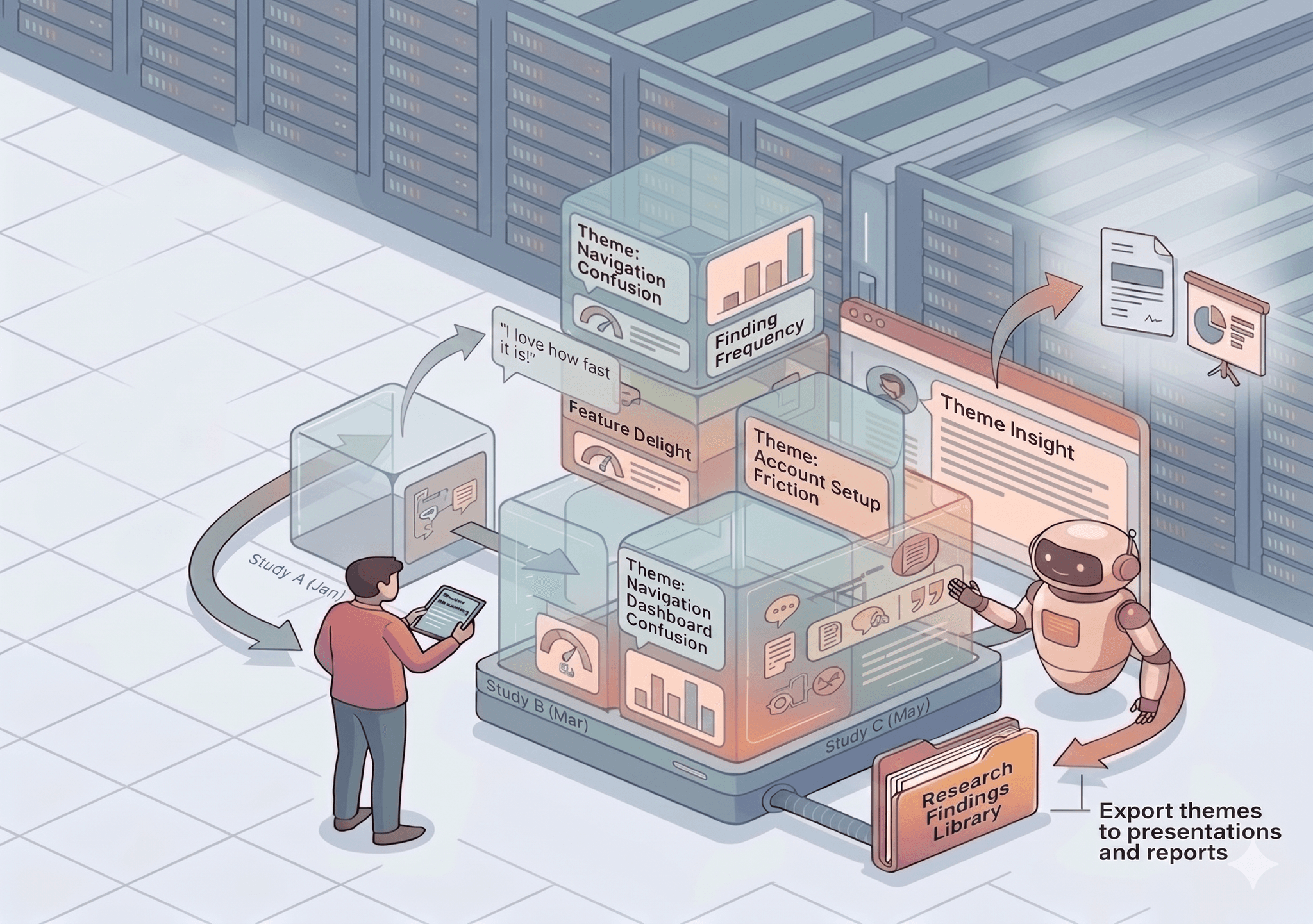
Every interview is analysed through the lenses that matter to UX research — Discovery, Product Reaction, and Usability. Findings are extracted using established human-centred design frameworks like Jobs to be Done, journey mapping, and heuristic evaluation, so insights map directly to the methods your team already uses.
- Discovery lens: needs, motivations, pain points, and jobs to be done
- Product Reaction lens: first impressions, expectations, and emotional response
- Usability lens: task success, friction points, and heuristic violations
- Grounded in HCD frameworks: JTBD, journey mapping, Nielsen heuristics
- Switch lenses on any interview to view the same data through a different frame
AI-Extracted Findings
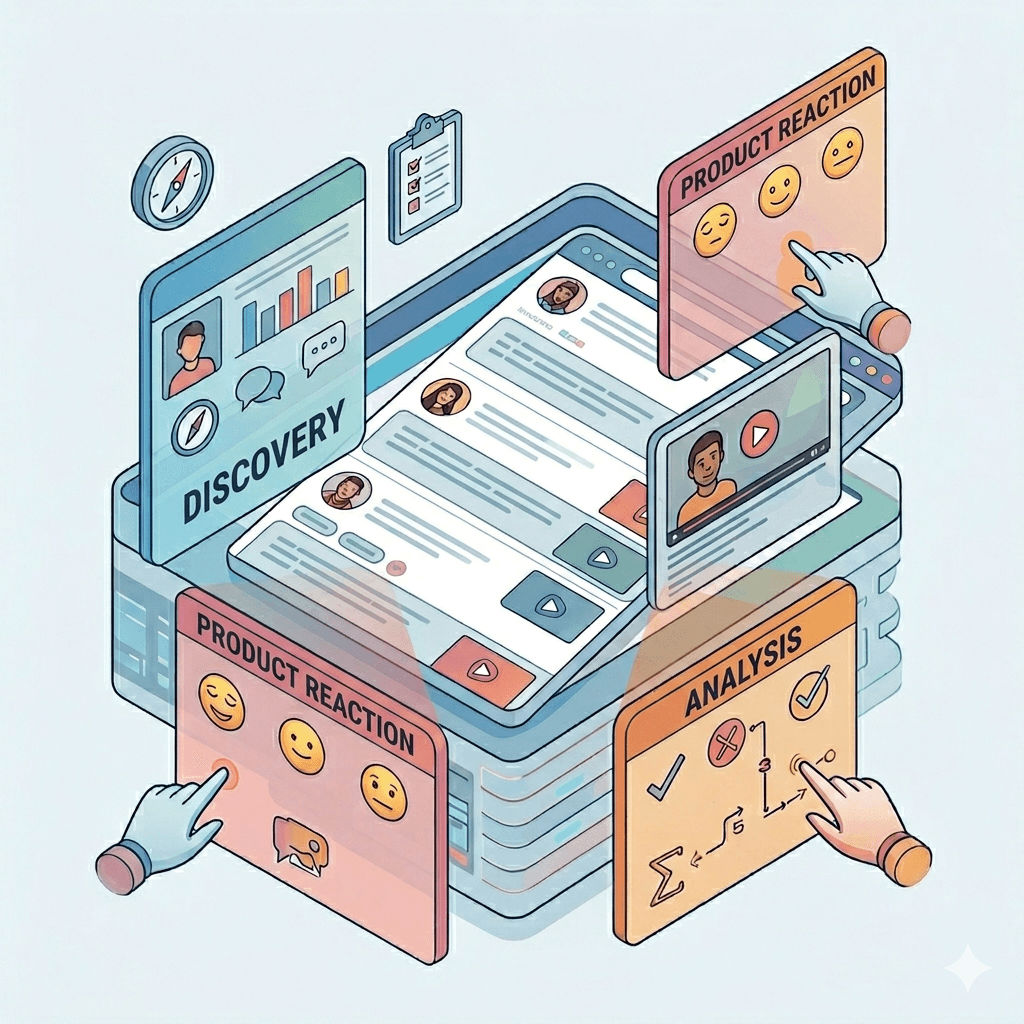
AI agents read every transcript end-to-end, pulling out observations, usability issues, and participant quotes — each linked to the exact video moment. Synthesise at any level of your folder hierarchy: roll findings up from a single interview, a study, a project, or your entire research library. Spend less time coding and more time thinking.
- Automatic observation extraction
- Usability issue identification
- Key quote identification with timestamps
- Synthesise at any folder level — interview, study, project, or workspace-wide
- Cross-session pattern detection
- Customizable extraction templates
Research Chatbot
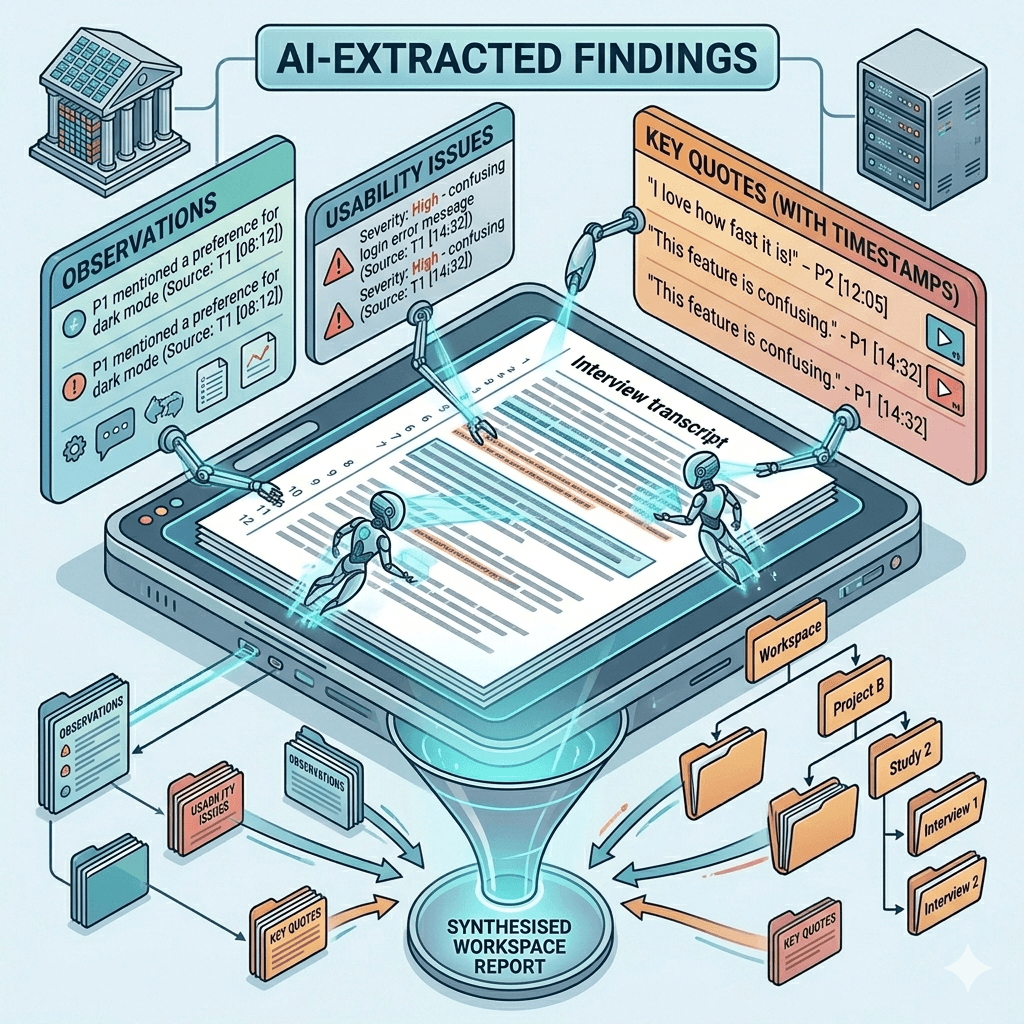
Ask questions about your research data in natural language. The chatbot has read every transcript and can surface relevant findings, quotes, and patterns instantly. Like having a research assistant who remembers everything.
- Natural language queries across all sessions
- Source citations with timestamps
- Follow-up questions and drill-downs
- Export chat insights to findings
- Context-aware responses
Themes That Build Over Time
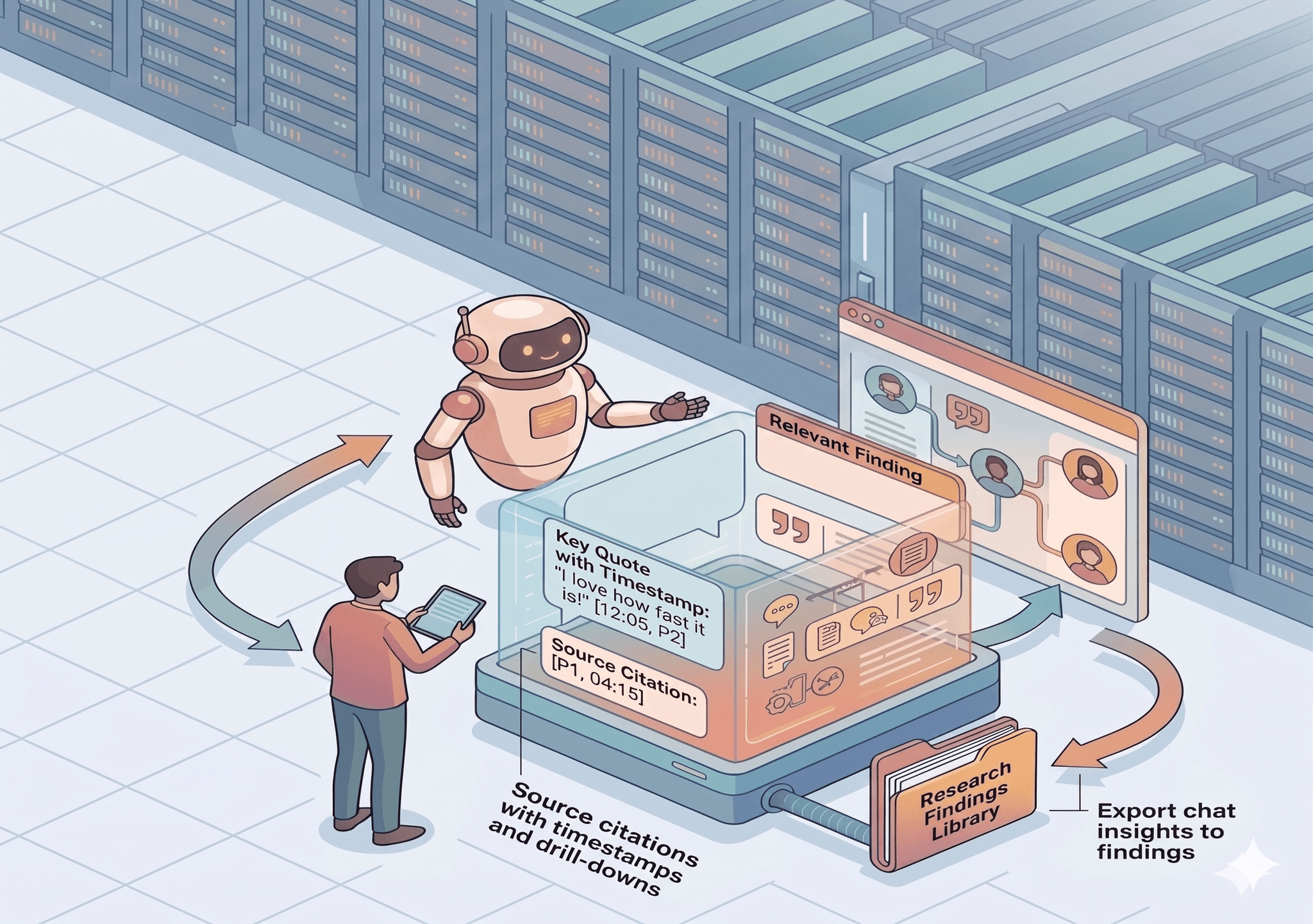
Findings cluster into themes that persist across studies. Each new study adds evidence to existing themes or surfaces new ones. Your research compounds — building a living body of evidence.
- Persistent themes across studies
- Evidence accumulation over time
- Link findings to source sessions and quotes
- Track finding frequency across studies
- Export themes to presentations and reports